No Job Too Big Or Complex
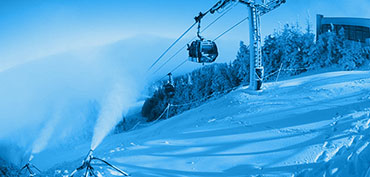
To thrive, a ski, snowboarding or snowtubing center must deal successfully with nature. Snowmaking invades nature to eliminate the element of chance. Machine-made snow can give a snow sports recreation area an earlier start, a longer season, and the best guarantee of continuous operation. It is the only sure way to have a profitable, thriving center of winter activity.
What is Snowmaking?
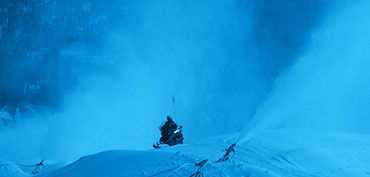
Snowmaking is the process of creating snow by dispersing minute water particles and air-under-pressure into freezing ambient air. This produces snowflake lattice structure that is similar to natural snow. By regulating flake water content, snow can be deliberately made from light powder to wet base snow, and to withstand higher temperature before melting. Snowmaking is a science that involves research, engineering and economics.
A Simple Science?
Only the basic principle is simple. End results separate amateurism from professionalism. Economic, logistic and engineering factors must be balanced against each other. What areas should be covered? What are the climate conditions? What are the snowfall, hill contour, exposure, and solar loss factors? How many skiers, snowboarders or snowtubing enthusiasts are expected to use the trail system?
Which type of snow machines to use? At what capacity? At what initial costs, operating costs, and maintenance costs? The relationship of these factors is further complicated by varying characteristics and efficiencies of pumps, air compressors and snowmaking machines. Energy loss due to system inefficiency, and elevation and dimensions of areas to be covered affect the physical size of the system. Energy factors must be correct.
The Cost?
In calculating cost, one must consider operating expenses. Costs of operation include the size of the labor force needed to operate the system, daily supplies required for operation, maintenance costs, and most important, the efficiency of the system. An inefficient system will cost you profit in every phase of your operation. Everything depends upon your snow system. Yet, a proper snowmaking system will run only 15%-25% of a ski center’s total operating expenses.